
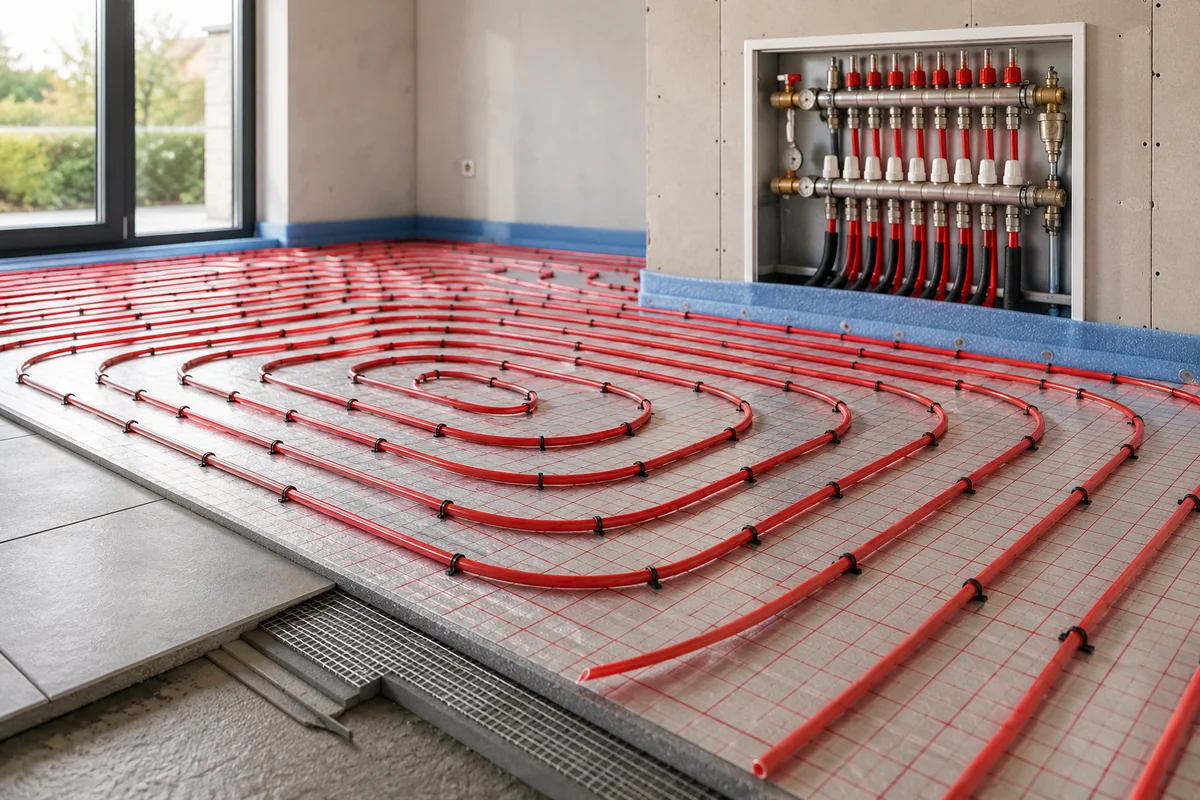
An underfloor heating kit packs everything you need for warm floors into one box — usually a heating mat, a thermostat and a floor sensor, plus the small accessories for fitting. Choosing well comes down to matching the wattage, thermostat and kit type to your room and floor covering. Here's exactly how to do that.
What is an underfloor heating kit?
An electric underfloor heating kit uses a thin heating cable, normally pre-spaced on a self-adhesive mesh, that sits under your floor finish and warms the room from the ground up. Most homes pick mat-based underfloor heating kits for bathrooms, kitchens and conservatories because they're slim, quick to lay and easy to control. They differ from water (wet) systems, which circulate warm water through pipes and suit whole-home, new-build projects far better than a quick retrofit.
What's included in an underfloor heating kit?
A complete underfloor heating mat kit is built so you can open one box and start work. Most kits contain:
- The heating mat — heating cable pre-woven onto a glass-fibre mesh, often with adhesive backing.
- A thermostat — manual, programmable or smart/Wi-Fi.
- A floor sensor probe (plus a protective conduit) so the thermostat reads floor temperature accurately.
- Fitting accessories — adhesive tape, connecting leads and clear step-by-step instructions.
- Often floor primer and a roller, and sometimes a multimeter to test the mat before, during and after installation.
What's frequently not included: insulation boards, tile adhesive and self-levelling compound. Good insulation under the mat is the single biggest factor in fast warm-up and lower bills, so budget for it even when it's sold separately.
How do you choose the right wattage?
This is the heart of choosing well. Electric mats come in three outputs, and getting this right matters more than price alone. Most electric mat systems are rated at 100, 150 or 200 watts per square metre.
- 100 W/m² — gentle floor warming for well-insulated, modern rooms.
- 150 W/m² — the most popular, balanced choice for most homes and bathrooms.
- 200 W/m² — for older or poorly insulated rooms, conservatories, big glazed spaces, or where the floor is the primary heat source.
As a rule of thumb, 150 W/m² works well for supplementary warmth, while 200 W/m² suits primary heating or draughty rooms — though a proper heat-loss calculation is always more accurate. As consumer body notes, a standard system uses around 150W per m².
Which thermostat and floor type suit you?
The thermostat decides both comfort and cost. A smart/Wi-Fi thermostat lets you schedule heating and warm only the rooms you're using, which trims running costs noticeably. Match the kit to your floor finish too: mats sit happily under tile and stone, and slim systems also work under engineered wood, laminate and vinyl — just check the maximum floor temperature your covering allows. A reliable underfloor heating system is only as good as the sensor and thermostat controlling it, so don't skimp here.
Mat kit vs cable kit vs water — and the costs people worry about
A heating mat kit is the fastest to lay in regular-shaped rooms; a loose-cable kit uses the same cable but lets you fine-tune spacing around awkward layouts; a water system costs more to install but is cheaper to run over large areas.
The honest concern is running cost. At the 2026 UK price cap of roughly 24.5p/kWh, a 150W/m² electric system in a 10m² room costs approximately 37p per hour at full power — but the thermostat cycles on and off, so real-world use is lower. That's why electric underfloor heating is brilliant for small rooms used in short bursts, yet expensive as whole-home primary heating. Other quiet worries, answered: floor build-up is minimal (mats are only a few millimetres thick); the cable carries a long manufacturer guarantee; and while the physical install is DIY-friendly, the final electrical connection must be carried out by a qualified electrician under UK Part P rules.
Which underfloor heating kit should you buy?
- Small bathroom or en-suite: a 150–200 W/m² mat kit with a Wi-Fi thermostat for quick, targeted warmth.
- Kitchen or hallway: a 150 W/m² underfloor heating kit under tile, plus insulation boards for faster warm-up.
- Conservatory or older room as main heat: step up to 200 W/m².
- Renting or fitting it yourself on a budget: a complete sticky-mat kit with everything in the box and a standard thermostat.
FAQ
Do I need an electrician to fit an underfloor heating kit?
You can lay the mat yourself, but the final connection to the mains should be completed and signed off by a qualified electrician.
What's the difference between a mat kit and a cable kit?
A heating mat kit has the cable pre-spaced on mesh for speed; a loose-cable kit gives more flexibility around odd shapes but takes longer to lay.
Are electric underfloor heating kits expensive to run?
For small rooms used in short bursts, not really. As whole-home primary heating they can be costly — independent figures from Which? back this up.
Can I use these underfloor heating kits under laminate or vinyl?
Often yes, with a lower-output mat — always check your flooring's maximum temperature rating first.


